







12 Main Car Engine Parts You Must Know
In this article, we shall learn about the different parts of car engines. A car engine is the heart of a vehicle that converts fuel into energy to power the vehicle's wheels. Let us first understand the types of engines and the different layouts available to us.
The different types of engines are as follows:
- Internal combustion engine (petrol and diesel operated)
- Hybrid electric engine
- All electric engine
- Fuel cell technology-powered engine
- CNG-powered engine
- LPG-powered engine
The various layout of the engine is as follows:
- In-line engine
- V-engine
- Horizontally-opposed engine
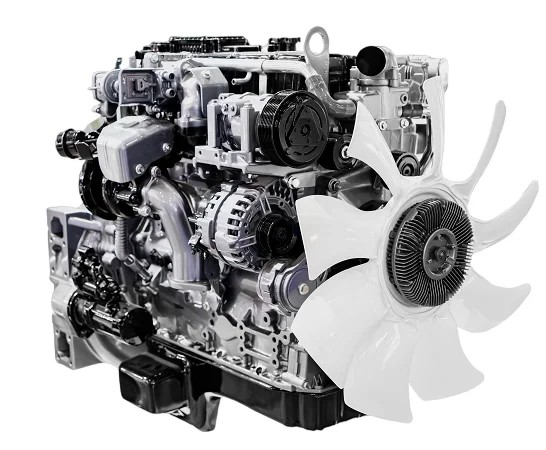
In this article will teach you about the different parts of car engine and what each one does. Engines are machines that help power cars, boats, planes, and more. They work by turning energy into motion that moves these vehicles. We'll give you a detailed look at how engines work and why they’re important for transportation. Whether you’re someone who loves cars or just interested in learning more, this guide will help you understand what happens under the hood of a vehicle.
An engine is a crucial part of a vehicle that converts fuel into energy. It is composed of multiple parts that work together to make it function. These parts include the cylinder block, cylinder head, intake and exhaust valves, fuel injectors, pistons, crankshaft, and more. Each part has a specific function, and understanding their location and function is crucial to understanding how the engine operates in an automobile.
Engine Block & Cylinders
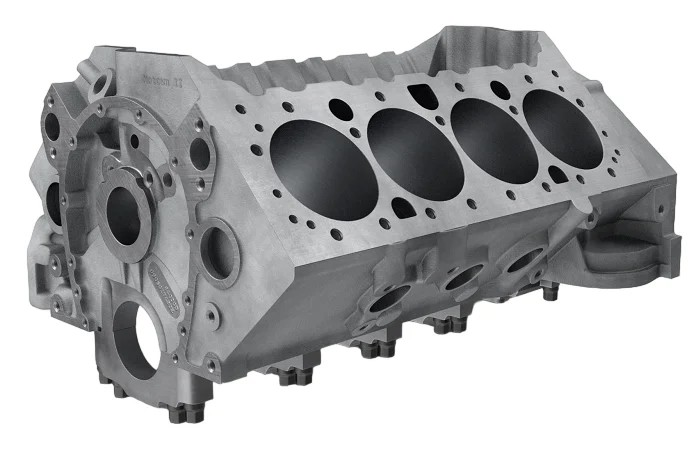
The engine block is a crucial part of the car's engine and is manufactured out of aluminum, iron, or other alloys. It acts as a housing for the core components of the engine like pistons, the crankshaft, and connecting rods, and is divided into three main sections(fixed) cylinder head, crankcase, and block.
The holes in the engine block accommodate the cylinders (which are around 4-16 metal tubes depending on the type of automobile) that, depending on the diameter in turn determine the engine displacement. When combustion occurs the pistons reciprocate. As per the necessary cooling and lubrication needs the coolant and oil flow take place in holes respectively.
Pistons & Crankshaft
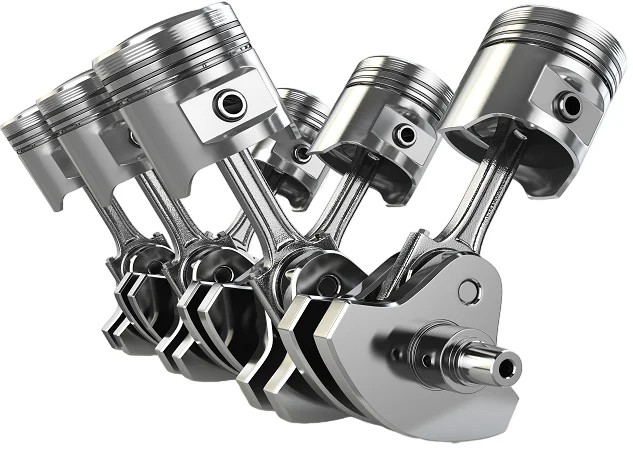
Pistons are also one of the major components of the engine. The cylinder houses a cylindrical plug known as the piston that rotates within it. It plays a vital role in converting the pressure energy generated by fuel combustion into mechanical power, which is subsequently transmitted to the crankshaft through the connecting rod. Pistons travel up and down twice for every rotation in the cylinder. An engine with a piston velocity of 1250 RPM will move up and down 2500 times in a minute. Pistons have rings to increase compression and reduce friction. Piston rings help prevent excessive rubbing against the cylinder.
Crankshaft, the power for the engine is derived via the crankshaft. It is responsible for the power transmission to all the parts of the engine. It transforms the reciprocating motion of the pistons into rotational motion with the help of a connecting rod. Heat-treated alloy steel casting or forged pieces are utilized for its manufacturing.
The crankshaft is made up of the following:
- Crankpins
- Main Journals
- Webs
- Balancing weights
- Lastly the oil holes
Piston Pins
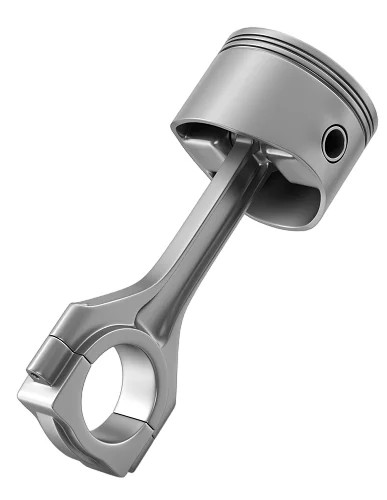
The piston rings create a strong seal with the cylinder wall. They are metallic split rings that fit the piston's outer diameter in steam or internal combustion engines. Modern designs typically have fewer rings, with 3-1 compression rings and 1 oil control ring per piston.
Piston rings seal high-pressure gases from the combustion chamber and facilitate heat transfer from the piston crown to the cylinder walls. They also ensure that there is sufficient lubrication fluid on the cylinder walls to reduce wear during the piston's travel.
Camshaft
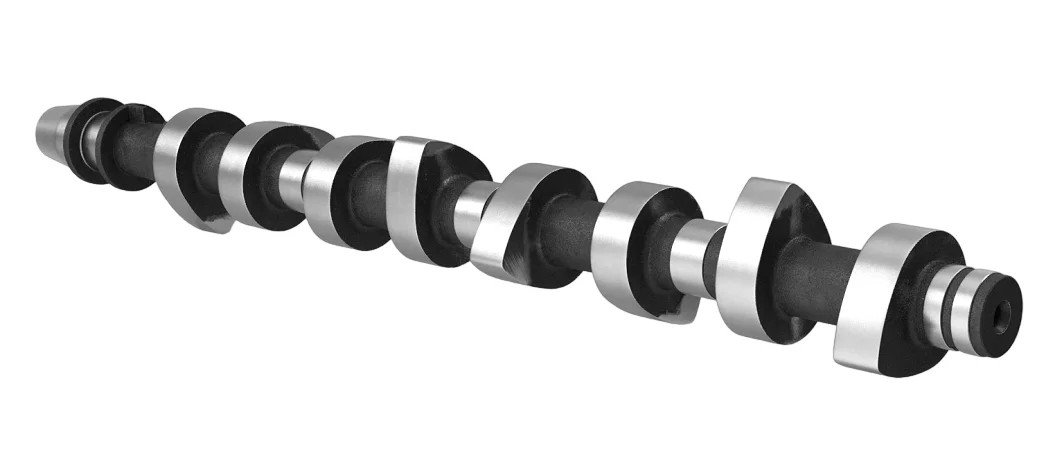
A camshaft is a shaft with cams installed on it. Cams transform the camshaft's rotary motion into the follower's linear motion. It operates the valves opening and closing. There are two cams per cylinder:
- for the inlet valve
- for the exhaust valve.
The camshaft also includes an eccentric to drive the fuel pump and gear to run the oil pump and ignition distributor. The camshaft is powered by the crankshaft, and the crankshaft gear has half the number of teeth as the camshaft gear. Camshafts are manufactured using alloy steel.
The camshaft converts the crankshaft's rotary motion into an up-and-down motion, controlling the lifters, pushrods, rockers, and valves movement. It also regulates the timing of the valve's opening and closing The camshaft may be present in the engine block, and cylinder heads, depending on the type of vehicle. They are located in the cylinder heads of many modern vehicles by the names:
- Dual Overhead Camshaft (DOHC)
- Single Overhead Camshaft (SOHC).
Timing Belt
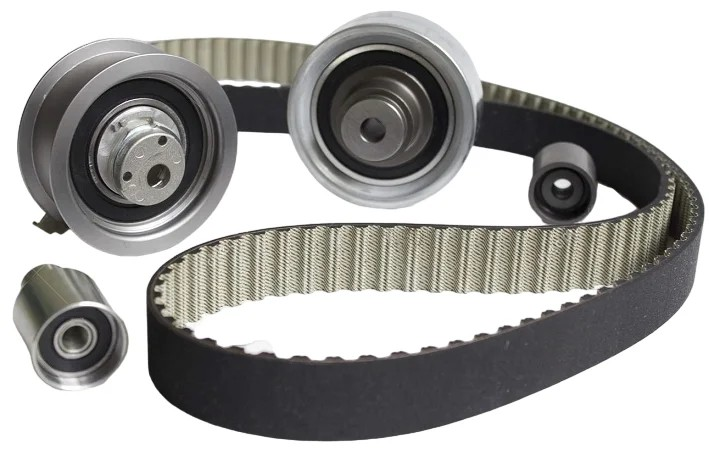
To synchronize the crankshaft and camshaft rotation in a piston engine, a timing belt, chain, or set of gears is used. The synchronization enables the valves to open and close at the appropriate timings corresponding to the piston's position. The timing belt or chain is essential to prevent piston-valve contact in an interfering engine.
The timing belt has teeth on its interior surface, whereas a roller chain is a type of timing chain. Gears on a sturdy rubber belt grip the camshaft and crankshaft pulleys in a timing belt system. The timing chain functions similarly to a bicycle chain, with teeth that wrap around the pulleys.
Spark Plugs
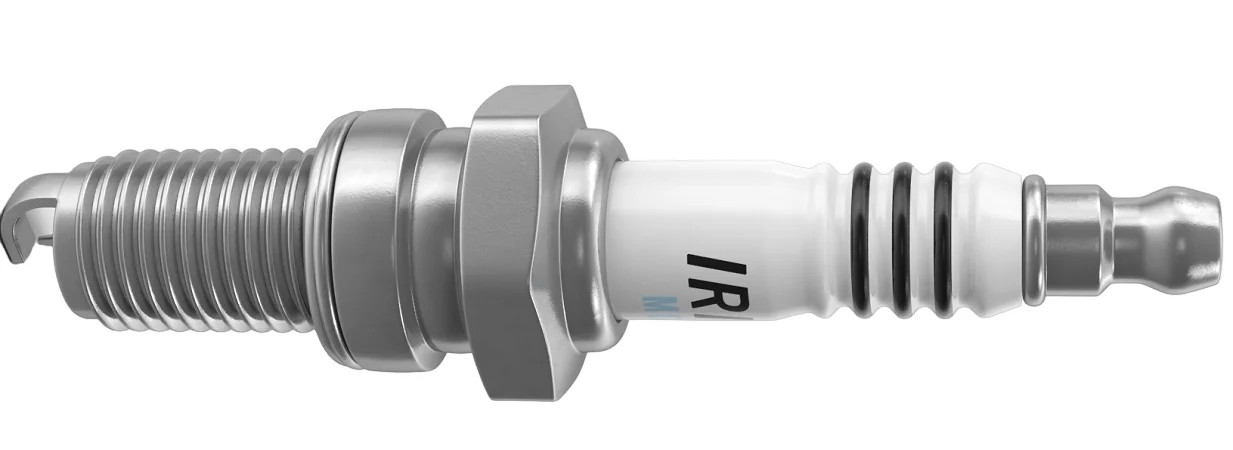
It is a type of electrical device used for the combustion of compressed fuel with the aid of an electric spark inside. It plays a vital role in maintaining the engine combustion process. It transfers the electric current from the ignition system to the spark-ignition engine's combustion chamber.
It consists of a ceramic insulator to separate the threaded metal shell of a spark plug from the electrode core.
Manifold (intake & exhaust manifold)
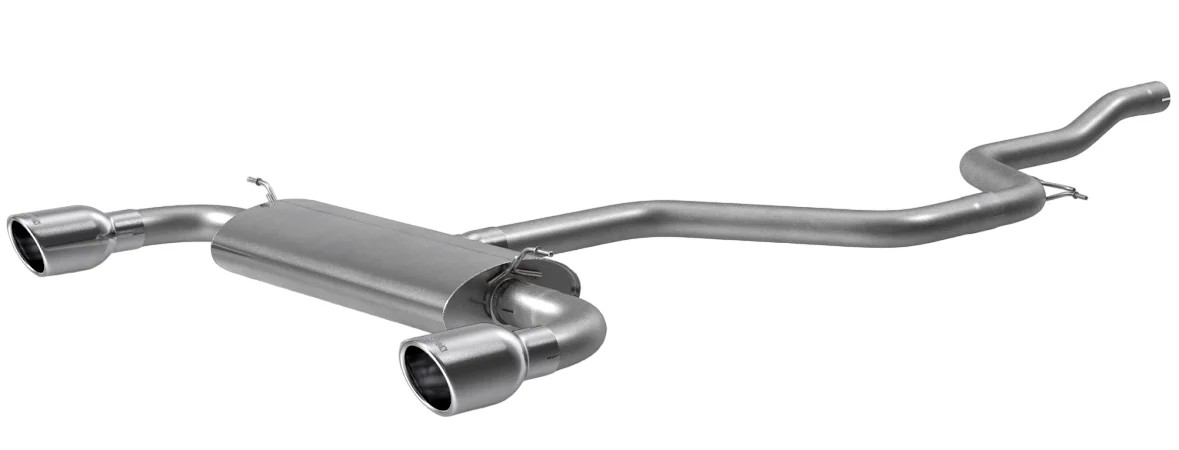
The cylinder head is connected to separate sets of pipes, known as manifolds, that transport the air-fuel mixture and exhaust gases. The manifold is designed to endure the high temperature of exhaust gases, and as a result, it is usually made of cast iron. The manifold includes several flanges, including the carburetor, intake, throttle body, and air intake flanges.
- Intake Manifold: is the engine component responsible for distributing air to the cylinders. Often, the throttle valve and other parts are contained within the intake manifold. In some V6 and V8 engines, the intake manifold is made up of multiple sections or pieces. The intake air passes through several components before entering the engine, including the air filter, intake boot, throttle body, intake manifold plenum, runners, and cylinders. The throttle valve controls the engine's RPM by regulating the airflow.
- Exhaust manifold: is a simple cast iron or stainless-steel unit that gathers engine exhaust gas from multiple cylinders and directs it to the exhaust pipe. It is linked to the exhaust valves and has a similar design to the inlet manifold. The exhaust manifold is responsible for transporting exhaust gas in both diesel and gasoline engines.
Connecting Rod
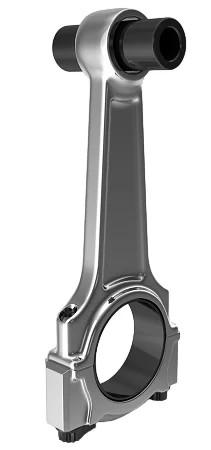
Its main job is to convert the reciprocating motion of the pistons into the rotating motion of the crankshaft. It is built light and strong to withstand twisting and pressure forces. It is manufactured from alloy steel, duralumin, and malleable graphite CI. A piston pin is used to attach the pistons to the connecting rod's small end while the bigger end is used to connect to the crankshaft via a crank pin. The compressive and tensile forces produced by the pistons are transmitted by connecting rod.
The connecting rod is primarily used in internal combustion engines, where it pivots on the piston end and rotates on the shaft end. It has a historical precursor in water mills, where a similar mechanical connection was used to transform the spinning motion of the water wheel into a back-and-forth motion.
Flywheel
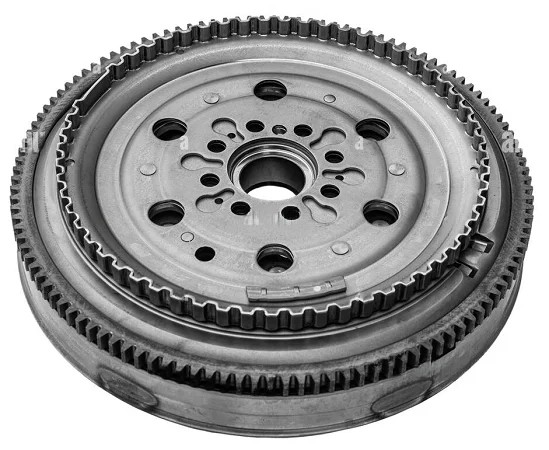
A flywheel is a mechanical component that employs the principle of conservation of angular momentum to store rotational energy proportional to its moment of inertia and rotational speed squared. Since the engine's torque is variable and not consistent, operating a vehicle with such erratic power can lead to rider discomfort and component wear.
To address this, a flywheel is utilized as a torque buffer to manage load fluctuations by storing torque during high-power phases and releasing it when needed.
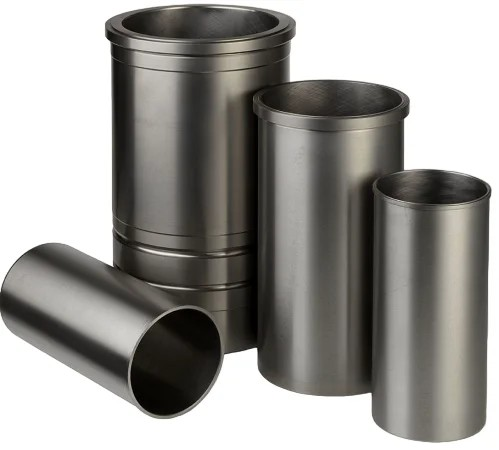
Cylinder Liner
important for the better operation of the engine. They can be replaced easily. Liners are manufactured from iron alloys with silicon, manganese, nickel, and chromium and are usually cast in a centrifugal manner. It is resistant to corrosion which thereby contributes to longer engine life.
The cylinder liner behaves as the inner wall of a cylinder, offering piston rings a sliding surface while also containing the lubricant inside the cylinder. The friction developed between the ring and the skirt of the piston causes wear and tear over time. Layers of glaze are developed naturally by driving the vehicle also an additional oil coating is provided in the cylinder wear to reduce wear.
Distributor
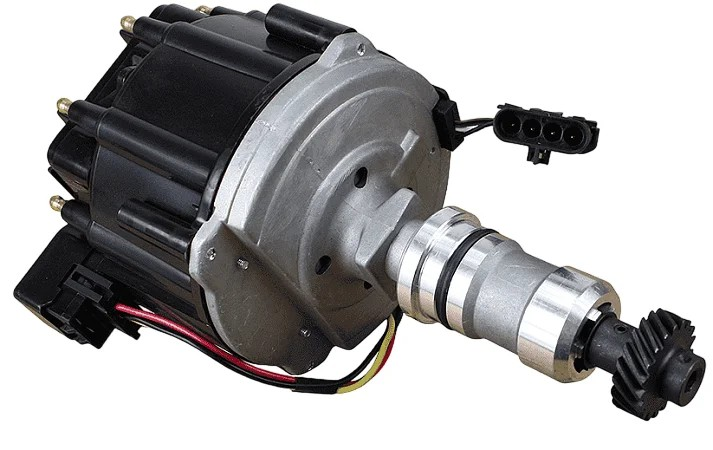
It is present in spark ignition and mechanically timed ignition systems. It is a rotating shaft inside an internal combustion engine. It performs the crucial function of delivering a high voltage current from the coil to the spark plugs.it also ensures this transmission of current takes place in proper sequence and at proper duration.
It contains a switch (mechanical or inductive) to control the opening and closing of the primary circuit in the coil.
Camshaft pulley
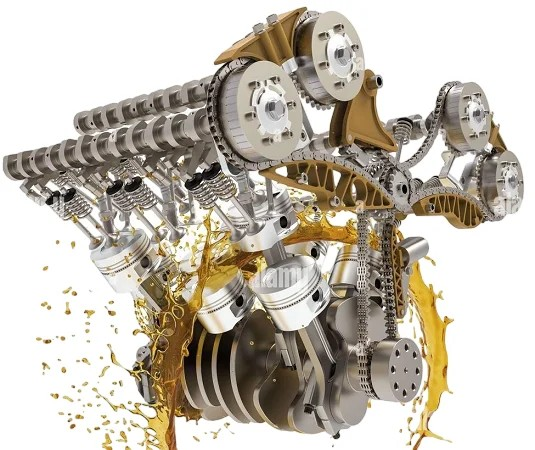
The timing system of an engine employs a cam pulley to control the speed of the camshaft, which governs the poppet valves that regulate the intake and exhaust of air in the cylinders.
The cam pulley and timing chain work together to ensure the rotation of the crankshaft and camshaft is synchronized.
What are the parts of marine engines?
A marine engine powers boats and ships. Parts include cylinder block, cylinder head, valves, injectors, pistons, crankshaft, turbocharger, and cooling system. They work together for efficiency and reliability. Understanding them is essential for safety, maintenance, and repairs.
What are the parts of a diesel engine?
A diesel engine runs on diesel fuel and has parts such as cylinder block, head, pistons, connecting rods, crankshaft, fuel injectors, intake and exhaust valves, turbocharger, and cooling system. Fuel ignites in the cylinders, and the crankshaft converts the motion to rotation. Valves control airflow, the turbocharger increases air supply, and the cooling system circulates coolant. Proper understanding of the parts is important for maintenance, repair, and operation.
What are the parts of a motorcycle engine?
The essential parts of a motorcycle are the cylinder block, head, pistons, connecting rods, crankshaft, spark plugs, fuel injectors/carburetors, camshaft, transmission, clutch, and exhaust system. These parts work together to create a powerful engine that powers the motorcycle forward. A proper understanding of these parts is necessary for proper maintenance, repair, and operation.
In conclusion, a car engine is a complex machine that is made up of several different parts, including the cylinder block, cylinder head, pistons, connecting rods, crankshaft, fuel injectors, intake and exhaust valves, timing belt or chain, camshaft, and cooling system. Each of these parts of car engine plays a specific role in the engine's operation, and they work together to make the engine function efficiently and reliably. Proper maintenance and understanding of the different parts of a car engine are essential for ensuring the engine's longevity and safe operation.