





In the intricate world of automotive
engineering, the camshaft plays a
pivotal role in the functionality
and efficiency of an engine. The
question of "What does a camshaft
do?" reveals the complexity and
innovation behind internal
combustion engines. This component
is essential for controlling the
engine's intake and exhaust valves,
orchestrating the precise timing
necessary for optimal performance.
By converting rotational motion into
linear motion, the camshaft ensures
that fuel intake and exhaust
expulsion occur at just the right
moments. Through understanding the
function of the camshaft, one gains
insight into the remarkable
engineering that powers vehicles
around the globe.
At the heart of every
combustion engine lies the
camshaft, a component whose role
is crucial yet often
understated. It's essential to
recognize that this piece of
engineering genius directly
influences an engine's
performance and efficiency.
The camshaft's primary
function is to regulate the
opening and closing of the
engine's intake and exhaust
valves. It does so through a
synchronized dance of rotation
and timing. As the camshaft
rotates, each camshaft lobe-a
meticulously designed
protrusion¡ªinteracts with valve
lifters or pushrods to precisely
control the timing and duration
that valves stay open. This
harmonious operation ensures
that fuel can enter the
combustion chamber and exhaust
can exit at the optimum moments,
directly impacting the engine's
power output and fuel economy.
The role of the
camshaft in a combustion engine
cannot be overstated. By
dictating the timing of the
valve openings, it plays a
pivotal part in the engine's
breathing process. The
efficiency of this process is
what allows a vehicle to glide
effortlessly on the road or roar
to life with power.
The innovation
behind each camshaft lobe's
design and the precision with
which the camshaft rotates
underscore the complexity of
modern automotive engineering.
These components work tirelessly
and unseen, yet they are
fundamental to the engine's
capability to harness energy
from fuel.
Now that you have an
understanding of the camshaft's
function, it's important to know
how they work. Let's start with
the basics.-By
NewCams
¡¡
Camshaft Basics
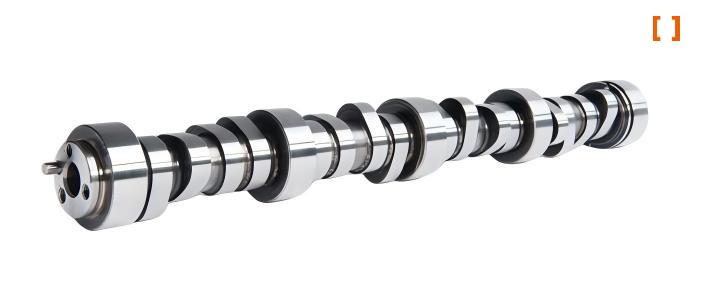
The key parts of any
camshaft are the lobes. As the
camshaft spins, the lobes open
and close the intake and exhaust
valves in time with the motion
of the piston. It turns out that
there is a direct relationship
between the shape of the cam
lobes and the way the engine
performs in different speed
ranges.
To understand why this
is the case, imagine that we are
running an engine extremely
slowly - at just 10 or 20
revolutions per minute (RPM) -
so that it takes the piston a
couple of seconds to complete a
cycle. It would be impossible to
actually run a normal engine
this slowly, but let's imagine
that we could. At this slow
speed, we would want cam lobes
shaped so that:
¡¤
Just as the piston starts moving
downward in the intake stroke
(called top dead center, or
TDC), the intake valve would
open. The intake valve would
close right as the piston
bottoms out.
¡¤
The exhaust valve would open
right as the piston bottoms out
(called bottom dead center, or
BDC) at the end of the
combustion stroke, and would
close as the piston completes
the exhaust stroke.
This setup would work
really well for the engine as
long as it ran at this very slow
speed. But what happens if you
increase the RPM? Let's find
out.
When you increase the
RPM, the 10 to 20 RPM
configuration for the camshaft
does not work well. If the
engine is running at 4,000 RPM,
the valves are opening and
closing 2,000 times every
minute, or 33 times every
second. At these speeds, the
piston is moving very quickly,
so the air/fuel mixture rushing
into the cylinder is moving very
quickly as well.
When the intake valve
opens and the piston starts its
intake stroke, the air/fuel
mixture in the intake runner
starts to accelerate into the
cylinder. By the time the piston
reaches the bottom of its intake
stroke, the air/fuel is moving
at a pretty high speed. If we
were to slam the intake valve
shut, all of that air/fuel would
come to a stop and not enter the
cylinder. By leaving the intake
valve open a little longer, the
momentum of the fast-moving
air/fuel continues to force
air/fuel into the cylinder as
the piston starts its
compression stroke. So the
faster the engine goes, the
faster the air/fuel moves, and
the longer we want the intake
valve to stay open. We also want
the valve to open wider at
higher speeds -- this parameter,
called valve lift, is governed
by the cam lobe profile.
The animation above
shows how a regular cam and a
performance cam have different
valve timing. Notice that the
exhaust (red circle) and intake
(blue circle) cycles overlap a
lot more on the performance cam.
Because of this, cars with this
type of cam tend to run very
roughly at idle.
Any given camshaft will be
perfect only at one engine
speed. At every other engine
speed, the engine won't perform
to its full potential. A fixed
camshaft is, therefore, always a
compromise. This is why
carmakers have developed schemes
to vary the cam profile as the
engine speed changes.-By
NewCams
There are several
different arrangements of
camshafts on engines. We'll talk
about some of the most common
ones. You've probably heard the
terminology:
¡¤
Single overhead cam (SOHC)
¡¤
Double overhead cam (DOHC)
¡¤
Pushrod
In
the next section, we'll look at
each of these configurations.-By
NewCams
This arrangement denotes an
engine with one cam per head. So
if it is an inline 4-cylinder or
inline 6-cylinder engine, it
will have one cam; if it is a
V-6 or V-8, it will have two
cams (one for each head).-By
NewCams
NewCams
¡¤ CamShaft
¡¡
The cam actuates rocker arms
that press down on the valves,
opening them. Springs return the
valves to their closed position.
These springs have to be very
strong because at high engine
speeds, the valves are pushed
down very quickly, and it is the
springs that keep the valves in
contact with the rocker arms. If
the springs were not strong
enough, the valves might come
away from the rocker arms and
snap back. This is an
undesirable situation that would
result in extra wear on the cams
and rocker arms.
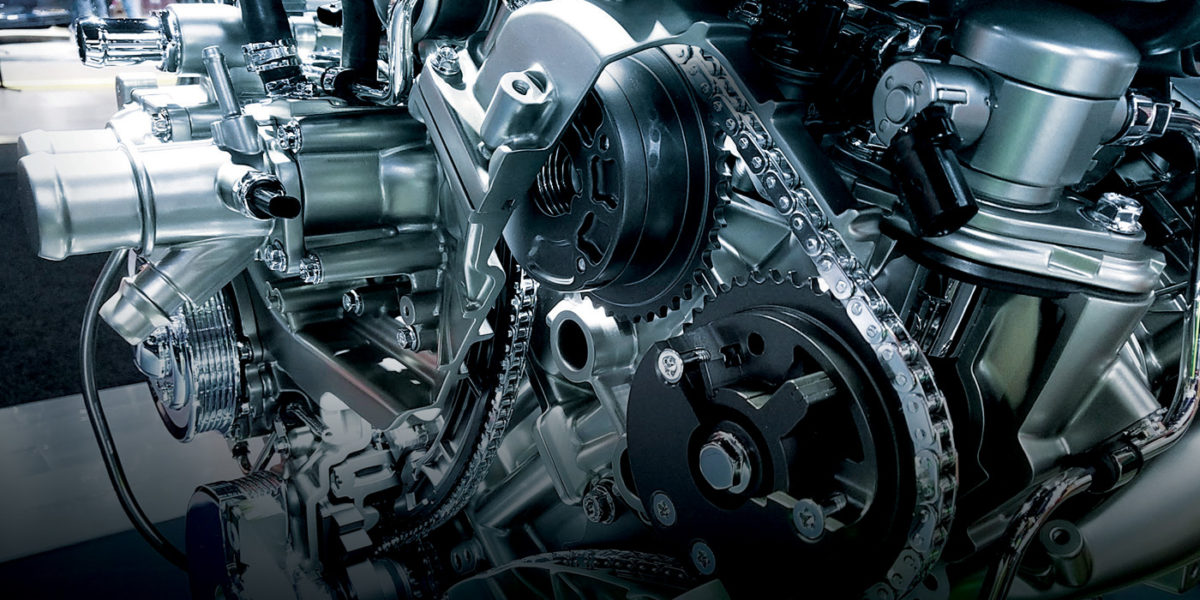
On single and double overhead
cam engines, the cams are driven
by the crankshaft, via either a
belt or chain called the timing
belt or timing chain. These
belts and chains need to be
replaced or adjusted at regular
intervals. If a timing belt
breaks, the cam will stop
spinning and the piston could
hit the open valves.
¡¡
¡¡
Double Overhead Cam
¡¡
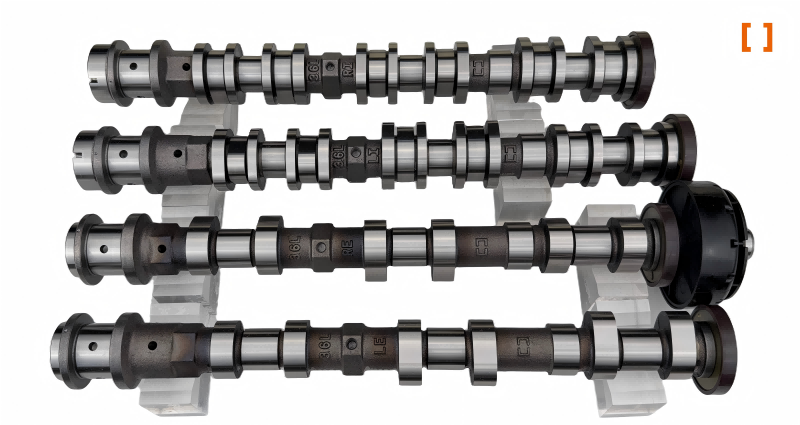
A double overhead cam engine has
two cams per head. So inline
engines have two cams, and V
engines have four. Usually,
double overhead cams are used on
engines with four or more valves
per cylinder -- a single
camshaft simply cannot fit
enough cam lobes to actuate all
of those valves.
NewCams
¡¤ CamShaft
The main reason to use double
overhead cams is to allow for
more intake and exhaust valves.
More valves means that intake
and exhaust gases can flow more
freely because there are more
openings for them to flow
through. This increases the
power of the engine.
The final configuration we'll go
into in this article is the
pushrod engine.-By
NewCams
¡¡
¡¡
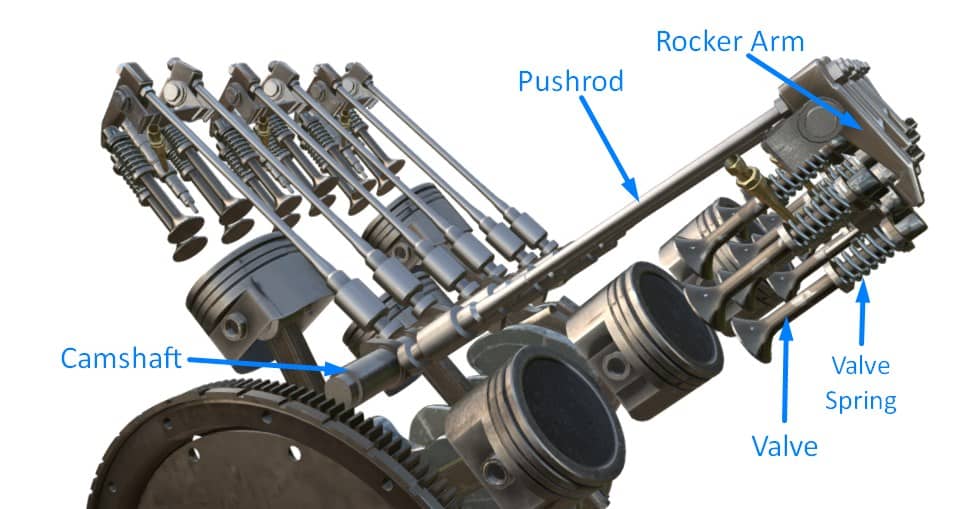
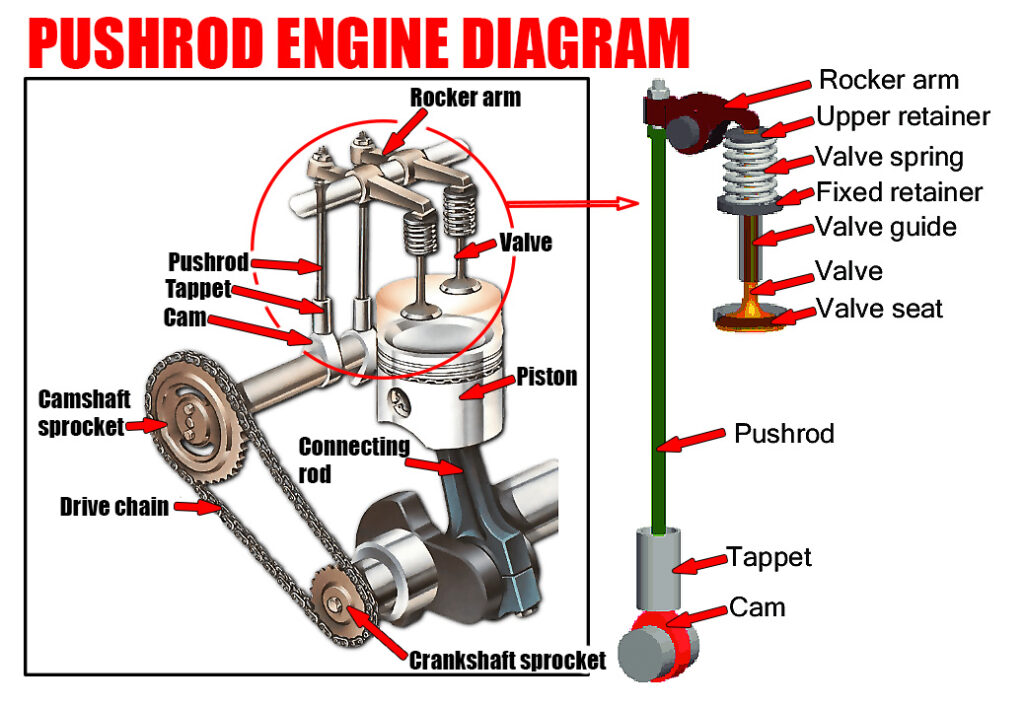
Pushrod Engines
Like SOHC and DOHC engines, the
valves in a pushrod engine are
located in the head, above the
cylinder. The key difference is
that the camshaft on a pushrod
engine is inside the engine
block, rather than in the head.
The cam actuates long rods that
go up through the block and into
the head to move the rockers.
These long rods add mass to the
system, which increases the load
on the valve springs. This can
limit the speed of pushrod
engines; the overhead camshaft,
which eliminates the pushrod
from the system, is one of the
engine technologies that made
higher engine speeds possible.-By
NewCams
¡¡
¡¡
A Pushrod Engine
The camshaft in a pushrod engine
is often driven by gears or a
short chain. Gear-drives are
generally less prone to breakage
than belt drives, which are
often found in overhead cam
engines.
A big thing in designing
camshaft systems is varying the
timing of each valve. We'll look
into valve timing in the next
section.-By
NewCams
There are a couple of novel ways
by which carmakers vary the
valve timing. One system used
on some Honda engines is called
VTEC.-By
NewCams
¡¡
VTEC (Variable Valve Timing and
Lift Electronic Control) is an
electronic and mechanical system
in some Honda engines that
allows the engine to have
multiple camshafts. VTEC engines
have an extra intake cam with
its own rocker, which follows
this cam. The profile on this
cam keeps the intake valve open
longer than the other cam
profile. At low engine speeds,
this rocker is not connected to
any valves. At high engine
speeds, a piston locks the extra
rocker to the two rockers that
control the two intake valves.
Some cars use a device that can
advance the valve timing. This
does not keep the valves open
longer; instead, it opens them
later and closes them later.
This is done by rotating the
camshaft ahead a few degrees. If
the intake valves normally open
at 10 degrees before top dead
center (TDC) and close at 190
degrees after TDC, the total
duration is 200 degrees. The
opening and closing times can be
shifted using a mechanism that
rotates the cam ahead a little
as it spins. So the valve might
open at 10 degrees after TDC and
close at 210 degrees after TDC.
Closing the valve 20 degrees
later is good, but it would be
better to be able to increase
the duration that the intake
valve is open.
Ferrari has a really neat way of
doing this. The camshafts on
some Ferrari engines are cut
with a three-dimensional profile
that varies along the length of
the cam lobe. At one end of the
cam lobe is the least aggressive
cam profile, and at the other
end is the most aggressive. The
shape of the cam smoothly blends
these two profiles together. A
mechanism can slide the whole
camshaft laterally so that the
valve engages different parts of
the cam. The shaft still spins
just like a regular camshaft --
but by gradually sliding the
camshaft laterally as the engine
speed and load increase, the
valve timing can be optimized.
Several engine manufacturers are
experimenting with systems that
would allow infinite variability
in valve timing. For example,
imagine that each valve had a
solenoid on it that could open
and close the valve using
computer control rather than
relying on a camshaft. With this
type of system, you would get
maximum engine performance at
every RPM. Something to look
forward to in the future...-By
NewCams
¡¡
¡¡
Quick Links
Contact Info
Welcome to visit us
YuHuan
NewCams
Machinery
Manufacture Co.,Ltd.
We complete every process carefully and
provide the best service for
each vehicle.